
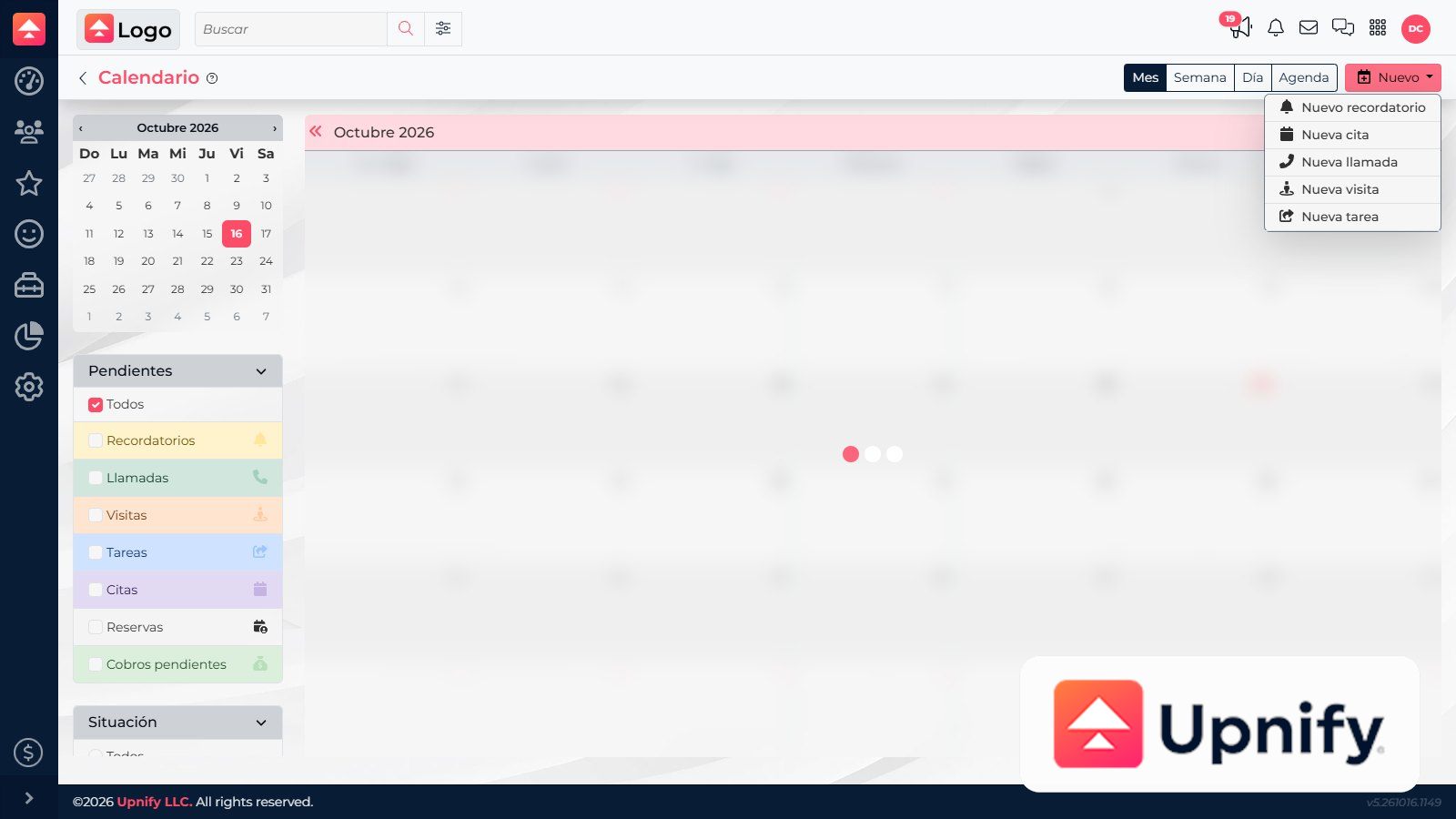
Activities turn a follow-up intention into work with an owner and date. Choosing the right type makes the next action easier to recognize and review later.
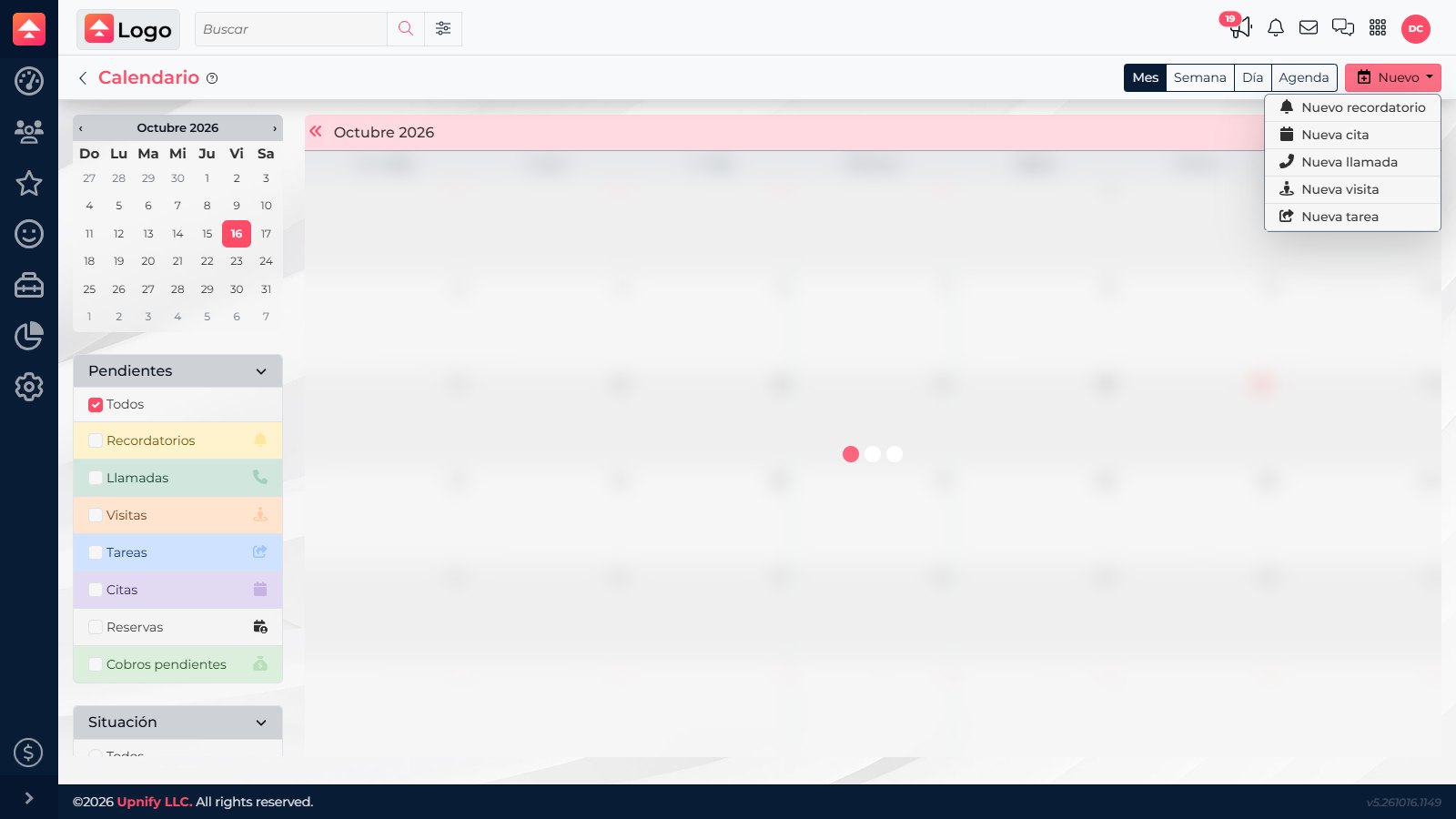
How the types differ
| Type | Use it when… | What to record |
|---|---|---|
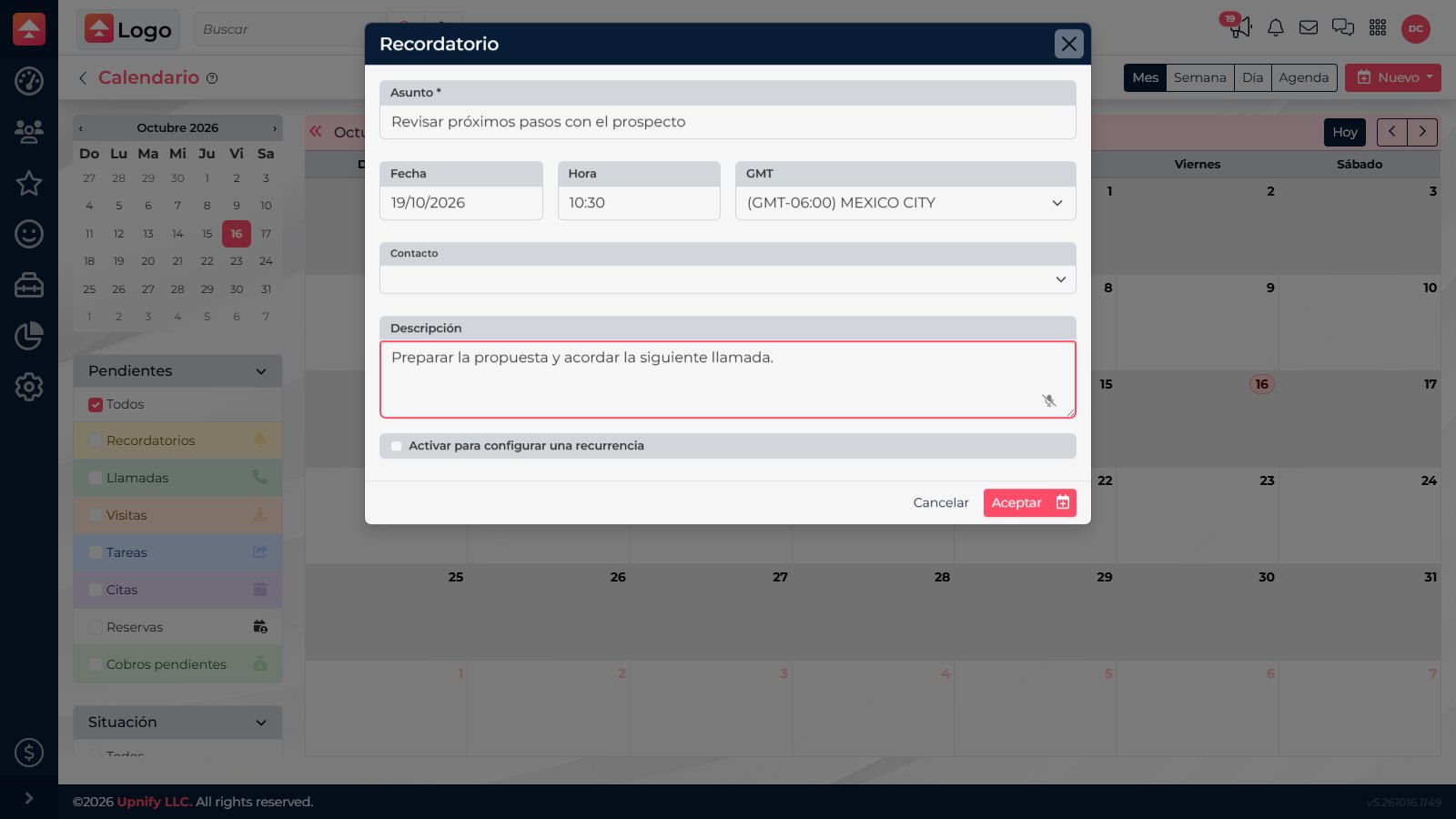
| Reminder | You need time for a brief action that is not a call, appointment, or visit. | Subject, date and time, related contact, and context. |
| Call | The next step is a phone conversation. | Contact, purpose, planned time, and points to cover. |
| Appointment | A meeting is agreed for a specific time, in person or remotely. | Participants, goal, location or link, and preparation. |
| Visit | The activity requires going to a location or receiving someone. | Contact, address, purpose, and logistics. |
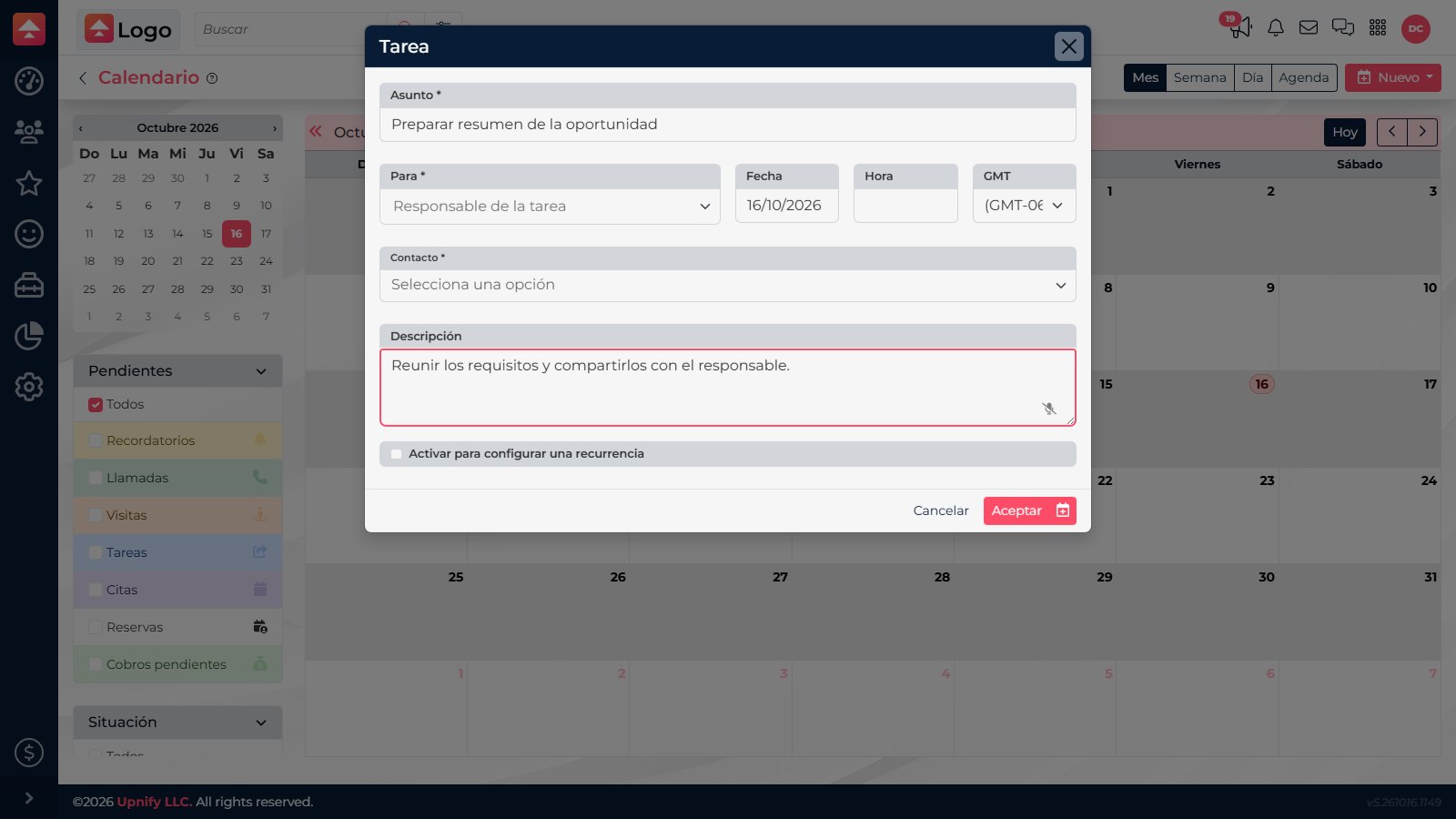
| Task | Someone must complete work, such as preparing a proposal or checking information. | Expected outcome, owner, due date, and context. |
How to decide
- If you need to remember a piece of work, create a reminder.
- If you will speak by phone, schedule a call; record the conversation afterward through call follow-up.
- If you agreed on a meeting time, use an appointment.
- If the activity happens at a physical location, use a visit.
- If someone must deliver a result, assign a task.
Write a clear action
“Confirm proposal quantities with Ana” is more useful than “Follow-up.” Link the contact and add preparation details; avoid unnecessary sensitive information.
“Confirm proposal quantities with Ana” is more useful than “Follow-up.” Link the contact and add preparation details; avoid unnecessary sensitive information.
Activity or call note
An activity organizes future work. Call follow-up preserves a conversation that already happened. You may need both: schedule the call, then record its notes afterward. Check the time zone and configure recurrence if it will repeat.